Indian Ocean
The Seychelles & Indian Ocean
Granite boulders older than mammals, palms that grow nowhere else, and beaches that look invented. The Indian Ocean's inner sanctum.
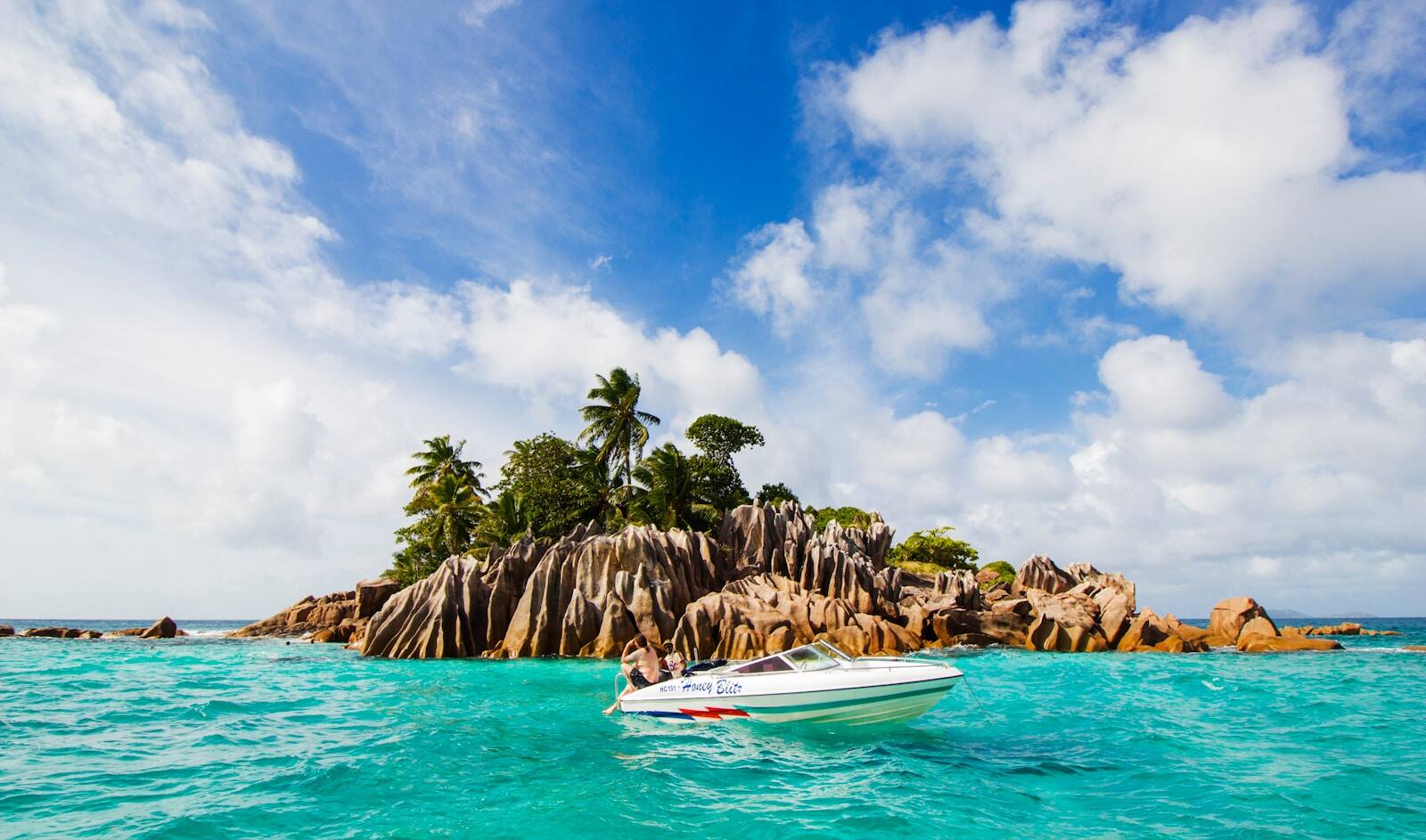
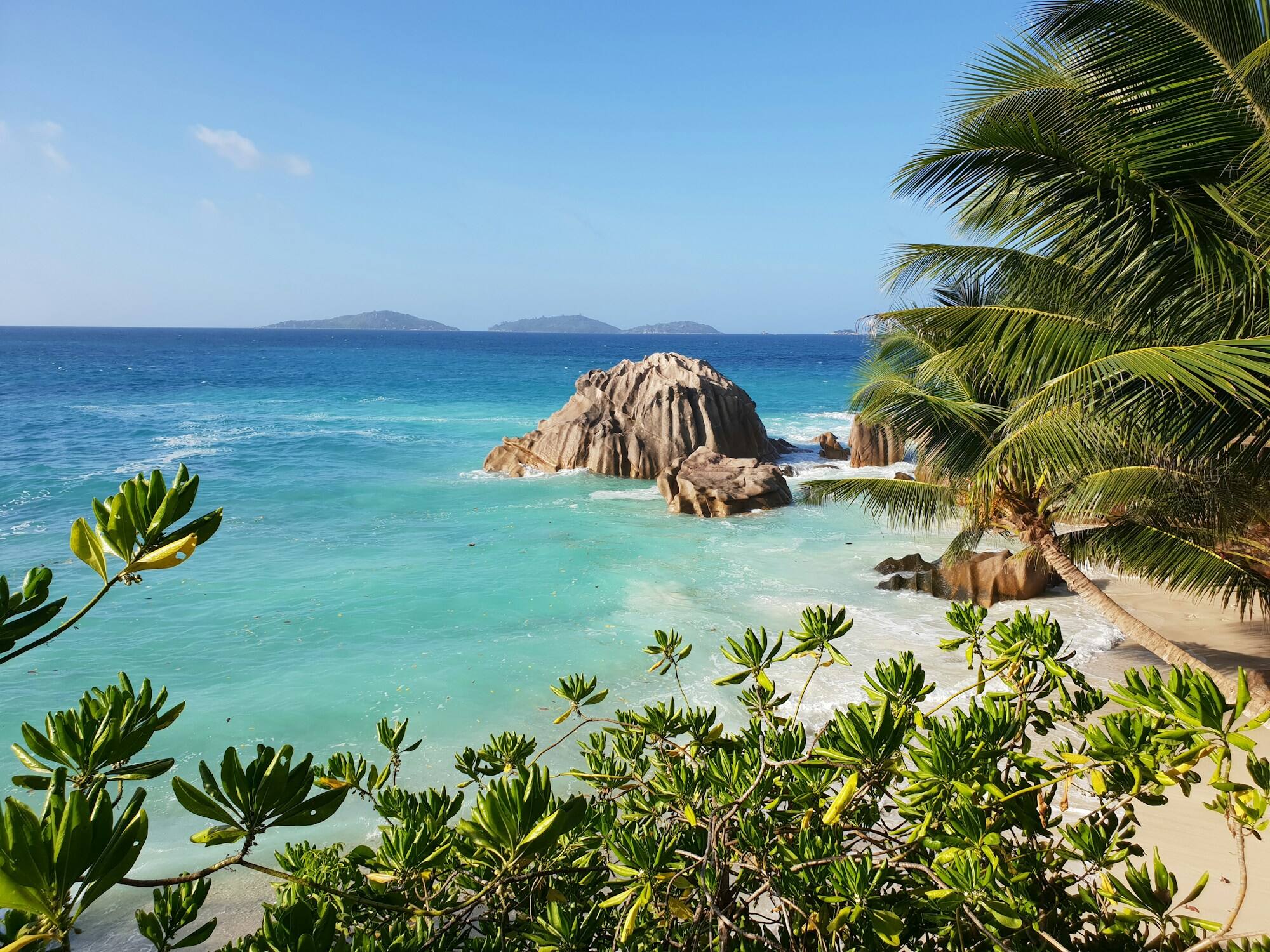
The Seychelles are the ocean's oldest islands — fragments of Gondwana, carrying species found nowhere else: the coco de mer palm with its impossible seed, the giant tortoises of Aldabra, the black parrot of Praslin. Anse Source d'Argent, on La Digue, is perhaps the most photographed beach on Earth, and at anchor off it at dawn, perhaps the most beautiful.
For the truly wild, our longer voyages reach Aldabra — the world's largest raised coral atoll, a UNESCO site with 100,000 giant tortoises and a lagoon patrolled by turtles and rays.
Ports & places
Where we call
Granite, sand and shallow jade; bicycles and oxcarts are the traffic. We anchor overnight for the dawn hour.
A palm forest preserved since prehistory — the coco de mer in its only native valley, UNESCO-listed.
Walk the boardwalk through mangroves among free-roaming Aldabra giants, once nearly lost.
The Galápagos of the Indian Ocean: a raised atoll, a hundred thousand tortoises, and no permanent population but them.
Victoria's market and its miniature Big Ben; Creole cuisine; the Morne Seychellois in cloud above the harbour.
In the frame
The light of the place