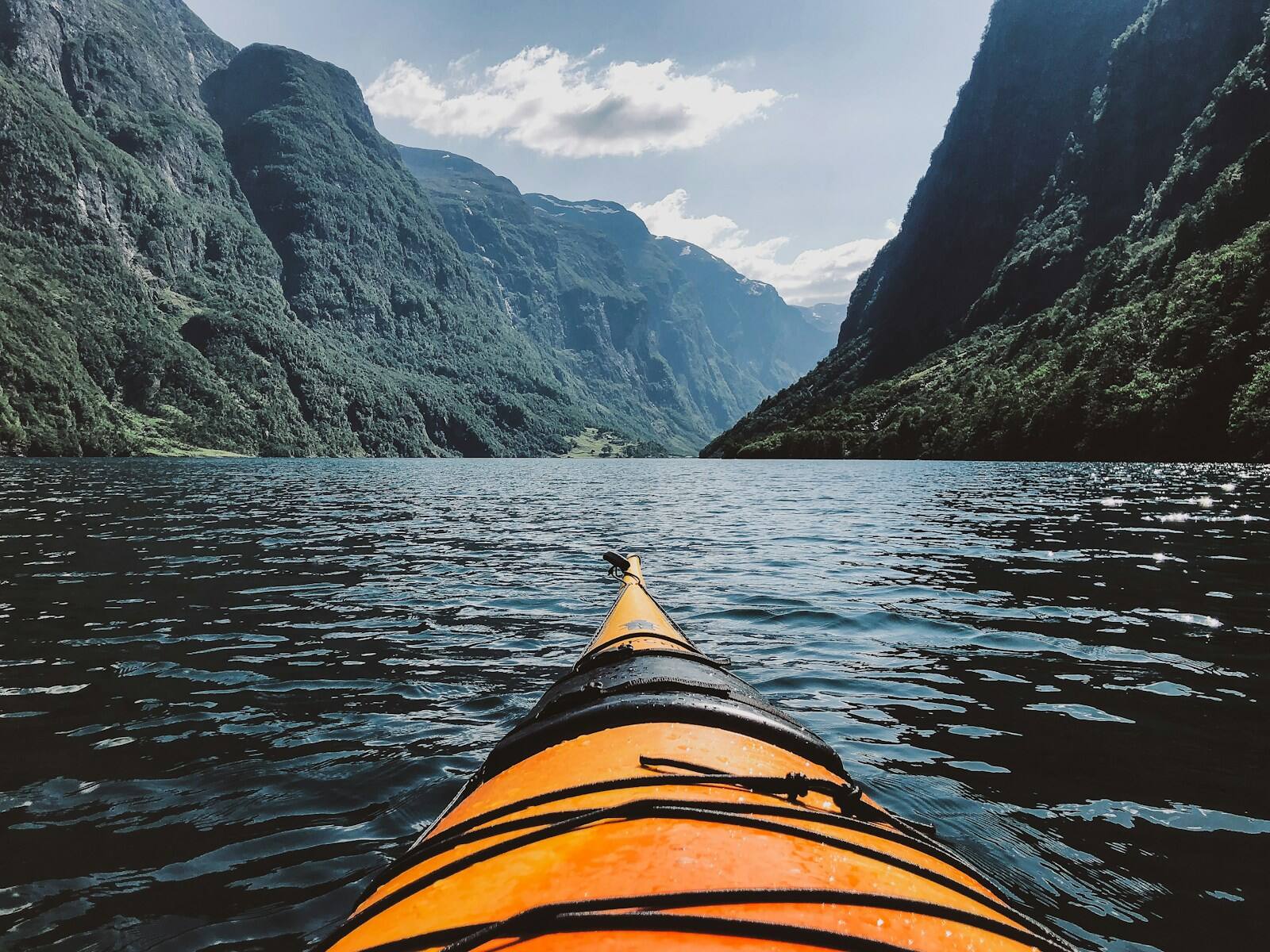
The ship drops anchor at six, and by half past the marina platform is open. The fjord at this hour belongs to exactly two groups: the waterfall and whoever is in the kayak. The water is black-green and so flat that your paddle strokes leave brief silver wounds that close behind you.
You paddle toward the Seven Sisters — seven threads of white water stepping down 250 metres of cliff — and the scale plays tricks. The waterfall looks close for an hour. The walls that seemed painted prove, up close, to be a kilometre high. This is why the fjords must be done slowly: the eye needs time to recalibrate to geology.
Our guide, Ingrid, paddles without apparent effort and tells stories about the mountain farms clinging to ledges above — places reachable only by ladder, where they tied the children to the wall for safety. "People lived here," she says, "because the fish were here first."
Back aboard by nine. The ship smells of coffee and warm bread. The day guests have not yet arrived in Geiranger; you have already had the fjord to yourself, which is the entire trick of travelling well.